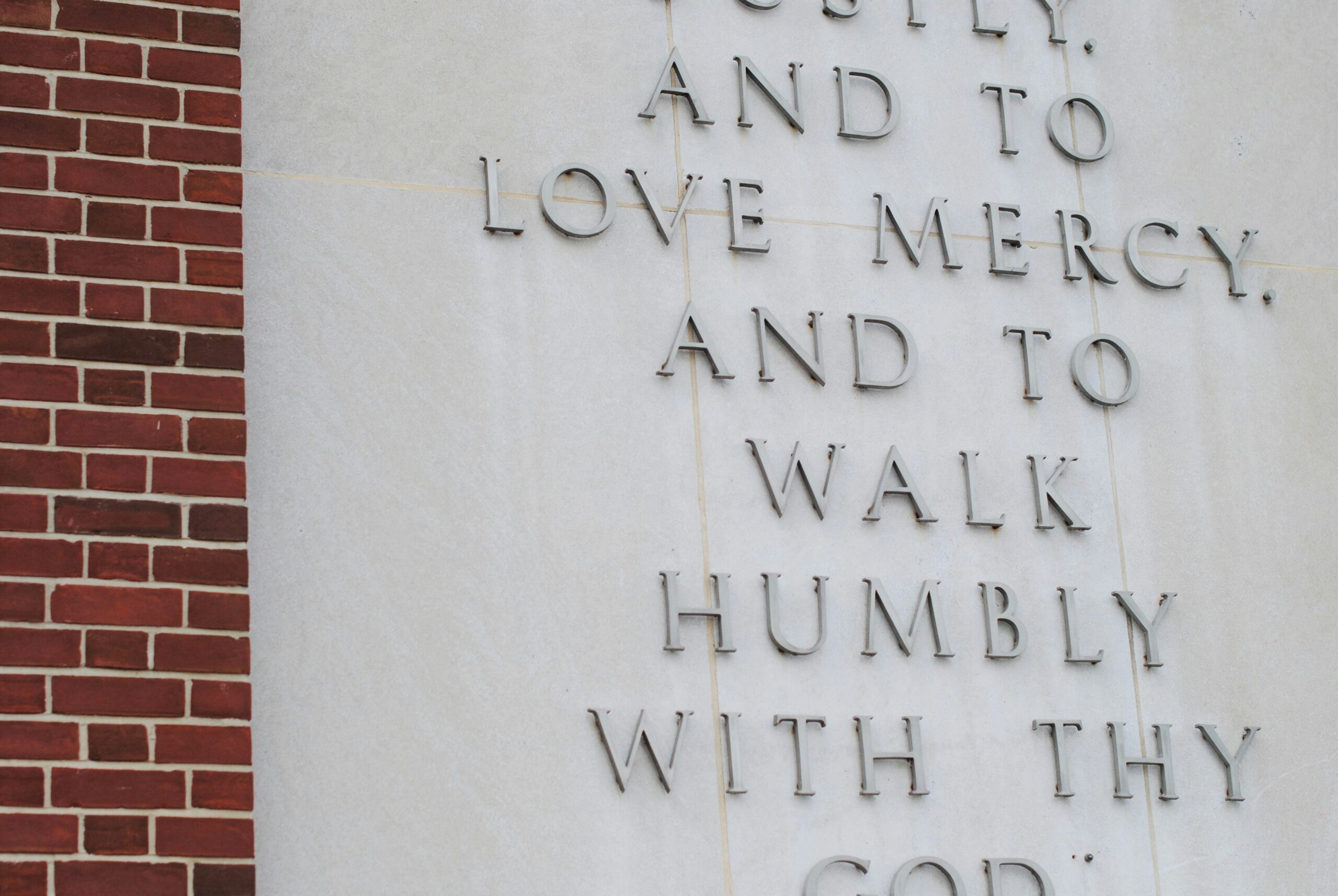
So in fact you cannot cause the dead to hear, nor can you cause the deaf to hear the call when they have turned their backs. And you are not the guide of the blind out of their error; you cannot make anyone hear but those who believe in Our signs and have submitted. Surah 30:52-53
The Qur’an warns against the cruel rulings of religious and political leaders and speaks directly to false powers that are manipulative. These leaders are deaf; they cannot hear the call to mercy which is everywhere, within us and coming after us, always in pursuit. False leaders embrace an insincere authority which pressures people at their most vulnerable states to find solace in a harsh god. How do we recognize these kinds of false commands?
A first signal is when leaders teach and preach that it is they who have the key, who have the power, who are the ultimate resource in knowing, judging, and condemning. Frightening thoughts, and yet too common, as so much of the world is caught and controlled by those who deem that within their own temporal order, they are the Final Answer, rather than God.
I have sat with people who have been traumatized by how God was presented to them. A form of spiritual malpractice, as they have been told by too many different religious leaders, of all persuasions, that God is exacting, demanding something, like their faith, in order for them to receive something, like eternal salvation! A quid pro quo, “a what for what;” a “something for something,” reducing God and one’s experience with God as transactional.
With a god of their own making, these so-called leaders are caught up within their own needs, fears, and hypocrisy, and impose from on high their rulings as if they knew exactly who God is and how God works. They appear religious, even solicitous, worried about the life of your faith being practiced “correctly.” They want to help, to correct, to improve, often blind to their own limitations and unconscious betrayals.
People sitting in my church office were often reduced to tears as they retold, in great detail, the pain, the disgrace, and the shame they endured:
A student, whose brother was killed in Afghanistan while serving his country; her family was confronted by protesters carrying placards sprayed with violent words at her brother’s memorial service. They were ‘church-goers’ damning homosexuality and everyone present to hell because the young soldier’s high school matriculated people of all sexual orientations.
A young mother criticized for her lack of faith in God’s power to answer prayers when she chose not to inflict her eight-year-old daughter with yet another round of ineffective experimental chemo. She wanted her child to enjoy the last summer of her young life, pain-free.
A daughter who was denied communion at her mother’s funeral because she was living with a new partner; her husband had been killed in an automobile accident a year earlier.
A young man, trying to return to his faith, denied entrance into a place of worship because he was wearing fashionable jeans with holes in them.
A person, unhoused, was told to move to the back pew because he didn’t smell right.
A mother with a young child who was told that she must stay with her husband, because she had made vows that could not be broken, even though he was emotionally and physically abusive.
A queer person was told that God didn’t make mistakes; they were a mistake.
And we wonder why people hang in there with God at all.
Qur’an repeats that disbelief in God is not the problem. Believing, if it comes, will come in its due time. The problem is hypocrisy and arrogance, idolatry, and an over-weening self-sufficiency which produces a people who think they know best, who deny complexity, life experiences, and nuances in order to promote their own importance and power.
This haughty superiority of thinking they know ‘the whole story’ becomes the enemy, and often it masquerades as a religiosity of sorts, reigning confusion, even terror on those who are in the process of their own search.
~ ~ ~ ~
My mentor, Gideon often talked about the power of confession, and one day, he shared with me his “greatest sin.”
As a young minister, he had become obsessed about the cleanliness of a small make-shift church in a rural village: tin corrugated roof, simple sidings, a dirt floor.
Every morning, he went to this church and cleaned it…food had been left, dirty blankets, trash not picked up. Every day, he cleaned, and every day he admonished his people for not keeping the church clean. One morning, beside himself, he tore the church down in his frustration. It had been easy to break down, so make-shift at its core. A good lesson for everyone! He had rendered his judgment for all to see.
And as the villagers came, the weeping and wailing began. This had been a place of solace when their child died too early, or a place of celebration for a wedding, or a place of reconciliation between family members torn by misunderstandings, or a place of song, or a place of protection and shelter in a storm – a literal storm.
“Of all the mistakes I’ve made,” said Gideon, “this was the worse. I couldn’t undo it. We rebuilt the church, but it wasn’t the same. The parishioners lost their trust in me. I cared too much about what I was supposed to do as minister. I was leaning on others’ expectations. I cared too much about proper worship and not who I was as a follower of Jesus.
“I learned then that religion has to do with the heart and the heart’s ‘cleanness,’ not the external ‘uncleanness.’ My preoccupation of being a good minister blinded me. I did not address the matters of the heart. I never made that mistake again.”
Day 21: Reflection
Have you been on the receiving end of cruel judgements? Has there been a time that you thought you knew ‘the whole story’ of another’s life? Or even your own life? And then made unfair judgments?
Can you give all those painful memories over to the mercy of God, that pursues you, always?