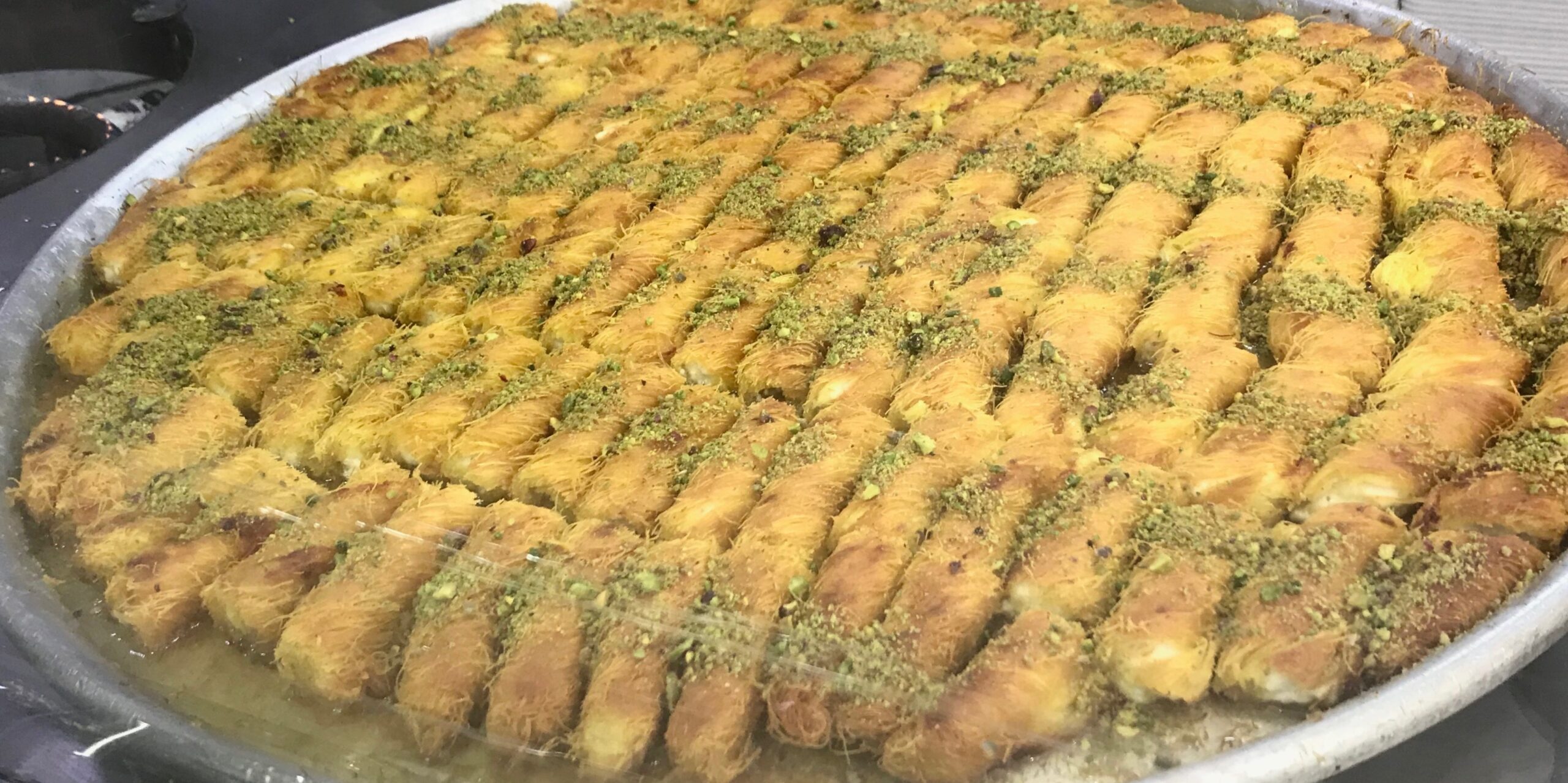
Eid Mubarak, Blessed Festival
Peace Be Upon You
Thank you so much for praying and reading with me during these holy days of Ramadan and Lent. Like a gift, your presence has helped to sustain me during these troubling times.
Today is Eid-al-Fitr, which means Festival of Breaking the Fast, and is the first of two important festivals in Islam, the other being Eid-al-Adha, which means, Festival of Sacrifice.
Eid-al-Fitr celebrates the end of Ramadan, the month-long dawn-to-sunset fasting, and begins with communal prayers in the mosques, followed by visits to relatives, giving gifts, sharing meals, and acts of charity to ensure that all members of the community can share in the festivities.
Usually, during these days, people are out in the streets, celebrating and the markets are lively with people getting their hair done, buying new clothes, eating sweets and traditional foods, and visiting family and friends. Much like within these festivities, I remember loving my new Easter dresses and playing with my cousins!
And yet, today, we need to be aware that many Muslim-majority countries are under threat of bombings, missiles flying, and fears about what the next day will bring. We keep everyone in our prayers as Muslims around the world celebrate the beauty of their faith in the best way they can.
Three months later, Eid-al-Adha, will be celebrated. With the culmination of the Hajj, the pilgrimage to Mecca, in fulfillment of the fifth pillar of Islam, this Festival commemorates Prophet Ibrahim’s devotion to God. Eid-al-Adha is marked by prayer, charity and the ritual sacrifice of an animal that is shared in three ways, for family, friends and neighbors and those who are without. The festivities are celebrated for three days.
Jews, Christians, and Muslims share the belief that Abraham/Ibrahim is the ‘Father of Faith’ because of his unwavering trust in God. Similar to the biblical account in Genesis, the Qur’an recounts that one of Ibrahim’s main trials of life was to receive and obey the command of God to slaughter his beloved son.
According to Islamic tradition, Ibrahim kept having dreams that he was sacrificing his son, Ishmael/Ismail. He knew that this was a command from God and told his son, ‘My son, I saw in a dream that I was offering you as a sacrifice. See now – what do you think?’ The son replied, ‘My father, do as you are commanded. God willing, you shall find me steadfast’ (Surah 37:102).
Acknowledging both the father and the son’s willingness to follow God’s command, the Angel Gabriel provides a ram from heaven to slaughter instead.
As a Christian, I am moved by Ismail’s participation, side by side with his father. I also discovered in my travels, that one of the root words of the Arabic word, sacrifice, is used by Middle Eastern Christians to signify the Eucharistic host.
No matter our differences, I continue to find many powerful similarities that encourage me in my faith. During this blessed time, by writing every day, by starting with a verse from the Qur’an, not only have I expanded my faith community to those beyond my Christian witness, I have also better prepared myself to travel with Jesus from his triumphant entrance into Jerusalem, to his suffering, his death, and his Easter resurrection. I hope the questions at the end of the Reflections have helped you as much as they have helped me.
The Qur’an reminds us that we need our diverse ways of thinking as a way to come to know each other. And in this knowing, together we come to a new understanding of that which is beyond us, the Sustainer of All, the Light of Truth, the Source and Goal of Creation, which continues to bless us the capacity to love ourselves, to love each other as our neighbor, and to love God.
My prayer during these holy days is that we find each other and extend to each other the Peace of God which surpasses all understanding.
Reflection for the Eid
In the Name of God, the All Merciful, Ever Merciful Say, He is God, the One, God, the Absolute. Neither did He beget, nor was He begotten. His like or equal there is none. Surah 112
It’s Ramadan, 2017/1437, about a week away from the Eid. I am flying with Royal Jordanian Airlines. Many of the passengers are Jordanians and I am assuming they are traveling to the States to be with family. Boarding is chaotic. People are speaking with their hands, boldly, with passion and with some trepidation. I don’t understand much of the Arabic, but it’s clear people want to change seats to be near their kids, their kin, and because you couldn’t really reserve a seat before-hand, not really, the time before take-off from Amman is tense.
The flight attendants are doing their best. As one passes by, I say, “If it will help, I can sit anywhere. I don’t care. Move me where you need me to go.”
“Oh, you are a God-send.” I am moved. And the family who benefits from my seat keeps thanking me, “Alhamdullilah, Praise be to God.”
In my new seat assignment, as we are listening to the directions of what to do in case of disaster, and rolling out onto the runway, with seat belts being fastened, I nod to the woman, probably in her 60s, sitting next to me. She is dressed as many Jordanian women are with hijab, head covering; she is wearing thick socks and dressed with many layers of loose clothing.
She slips off her light-weight plastic sandals, wipes her face with her hands, and says her prayers for a safe journey. She then brings out some food. When traveling during the days of Ramadan, no one fasts, yet I am not paying much attention, as I am concentrating on my Sudoku puzzle. She splits in half a small cucumber and hands it to me,
“Ahlan wa sahlan.”
I never tire receiving this common greeting. “Ahlan” means you’re among family. And “wa sahlan” means I wish peace and good health as you continue your travels. By the grace of God, may your path be made with ease on the plains of life, in sha’Allah, God willing. Let me wash your feet, give you water, tend to your heart, and help you find rest. Against the harshness of the desert, let me provide you safety.
“Shukran,” I say with a smile. Thank you. The cucumber is crunchy. So perfect. Just what I need. And then she splits her tangerine, and gives me half, and then she splits very carefully her napkin in half, and shares it. She takes a delicious dessert, ma’amoul, made with pistachios, dates, rose water, and clarified butter, and gives me a piece.
There is no self-consciousness about how freely she is giving to me. I am among family, her kin, part of her tribe, sitting in her aisle. I am a part of her life. She doesn’t ask if I want anything. Doesn’t say a word. She just gives. She can’t imagine eating without sharing her meal with me. Later during the flight, I receive a meat patty and another orange. And more sweets.
As the plane lands, she says her prayers in thanksgiving for safety. I say to her “Ramadan Mubarak.”
She takes my face into her hands; kisses both my cheeks, and we laugh.
“Travel with safe,” she says as her hand goes to her heart, and my hand to my heart as well, and we part.
A chance encounter, strangers, our lives so different, yet we had become family through grace and hospitality. I will always remember her. You are among family; may your way be made with ease.
The gift of sharing food between strangers and the gift of entertaining angels unawares reveal the capacity we have to care for each other. Sometimes we have to travel half way across the world to remember that this human yearning to share sustenance is embedded in our core.
As lovers of Love, we can become our own miracles of cure and care, where steadfast love and faithfulness meet, where righteousness and peace kiss each other, as a sanctuary with the Sustainer of All.
Peace be upon you.
Ahlan wa sahlan.